The abrasion (resurfacing) property of the Er:YAG laser is used to reduce and smooth old surgical scars, acne scars and burn scars. The aim is to remove the scar together with the surrounding tissue so that new, smoother-looking skin forms in its place.
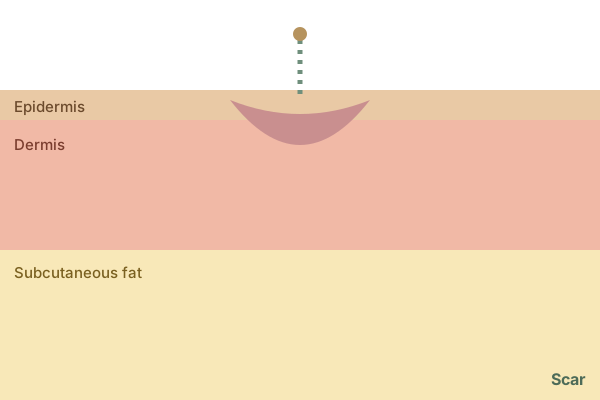
Because the Er:YAG laser is strongly absorbed by water, it removes tissue in very thin, controlled layers. Raised or irregular parts of the scar and its surroundings are thinned together; during healing, newly formed skin covers the area more smoothly.
In scar reduction treatment, a smoother skin appearance can usually be achieved in 2 or 3 sessions. The number depends on the age and depth of the scar and the skin type.
Not every scar is suitable for laser. Very wide or problematic scars may need surgical scar revision, and people prone to keloids need careful evaluation.
Scars after surgery whose tissue looks different from the surrounding skin.
Depressed or irregular post-acne marks (see the acne scar page for details).
Irregularity and texture difference after superficial burns.
The type, age and depth of the scar are assessed, and it is decided whether laser or surgical revision is more suitable.
After local anesthesia, the scar area is resurfaced in a controlled way with the laser. Duration depends on the size of the area.
Redness and crusting can last a few days. Sun protection and moisturizing are important. Sessions are spaced to allow adequate healing.
Scars are generally not erased completely; the goal is to reduce them noticeably and soften the texture difference.
A smooth appearance is usually targeted with 2–3 sessions; this varies by person and scar.
Temporary darkening can occur, especially in darker skin types. Sun protection and your doctor's advice reduce this risk.
Contact our expert team and let us plan the right solution for you together.
Contact via WhatsApp Book an Appointment